
How to Make Rainbow Light in Your Room (5 Methods Ranked From Free to Breathtaking)

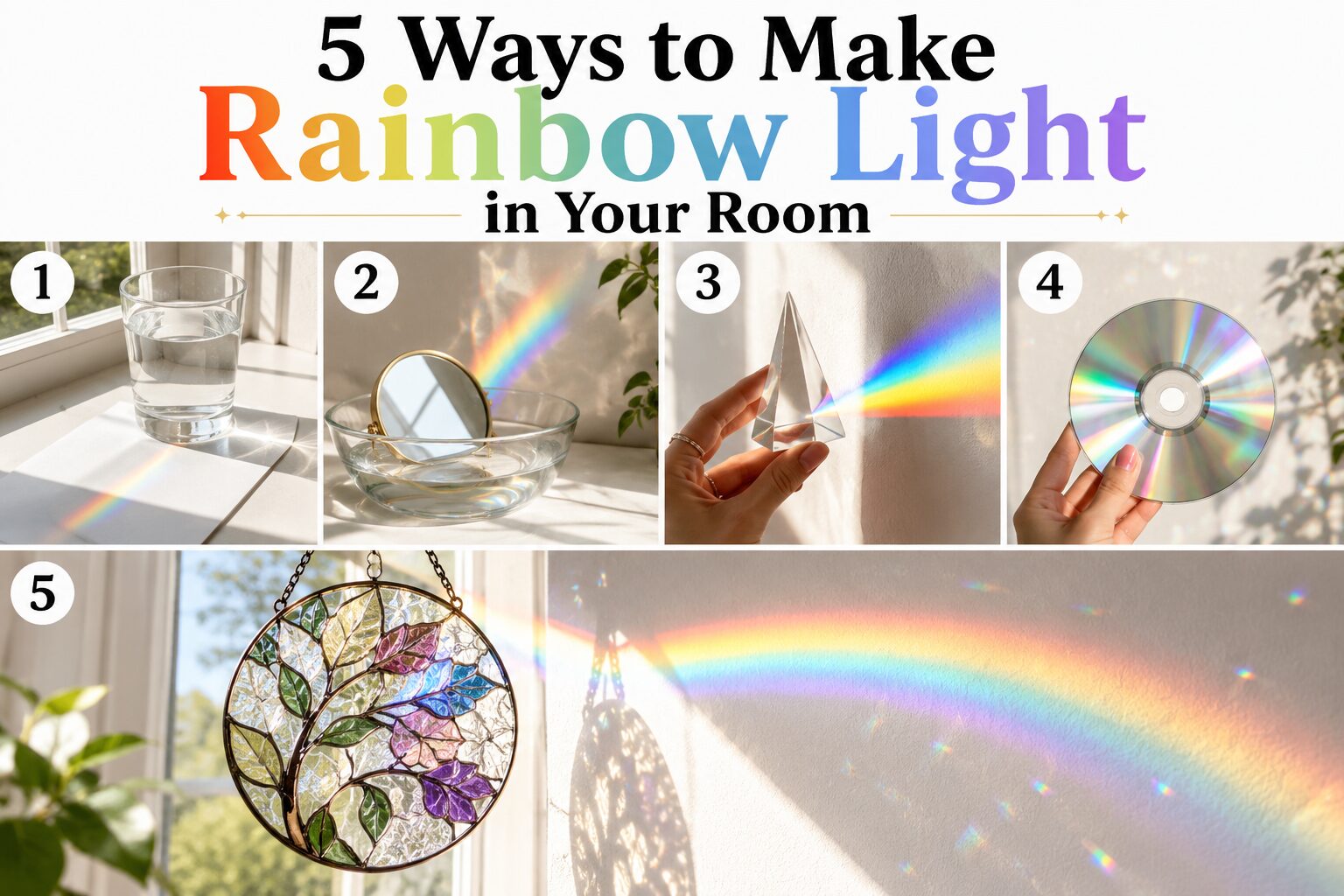
The easiest way to make rainbow light in your room is to hang a stained glass suncatcher in a south-facing window. On a sunny morning, it fills your room with brilliant, vivid rainbow bands of colour in seconds no setup, no equipment, no effort. But if you want to experiment first, here are five methods ranked from free-to-try to genuinely spectacular.
You have seen it in photos. A room bathed in rainbow light soft bands of red, orange, yellow, green, blue, and violet arcing across white walls. It looks like something out of a fairy tale. The good news: it is not hard to create, and several methods work beautifully in any home.
A rainbow appears when white light sunlight or any strong white light source passes through a transparent material that bends each colour wavelength by a slightly different amount. Red bends the least and appears at the top. Violet bends the most and appears at the bottom. All seven colours in between red, orange, yellow, green, blue, indigo, and violet arrange themselves in perfect sequence every single time.
This guide covers five methods for making rainbow light in your room, ranked from the most basic (free, works today) to the most visually spectacular (the kind of rainbow display that stops every guest in their tracks).
Why the Direction of Your Window Changes Everything
Before you try any method on this list, pick the right window. This step determines whether your rainbow is a faint smear of colour or a vivid, room-filling display.
South-facing windows receive direct sunlight for the longest stretch of the day ideal for all-day rainbow displays from late morning through early afternoon. East-facing windows catch the best morning light, producing warm amber-tinted rainbows in the first two hours after sunrise. West-facing windows give you the most dramatic golden-hour rainbows in the late afternoon and evening.
North-facing windows receive no direct sunlight and will produce very little or no rainbow effect with any of the methods below. If your room has only north-facing windows, a flashlight can substitute for sunlight in methods 2, 3, and 5.
Method 1: A Glass of Water on the Windowsill (Free, Works Today)
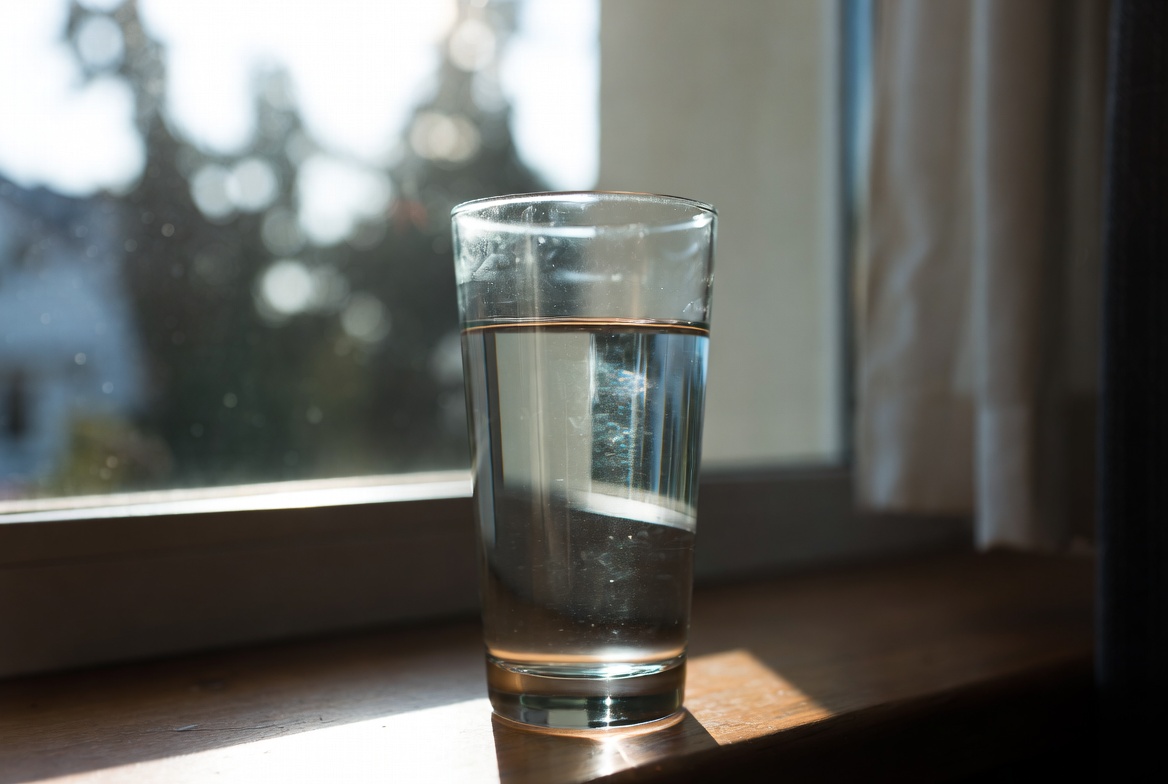
What you need: A full glass of water, a sunny windowsill, a white piece of paper or card Rainbow quality: Small and soft great for beginners Difficulty: Zero
This is the oldest trick in the book, and it genuinely works. Place the glass so that it is half on and half off the edge of a table, and so that the sun shines directly through the water, onto a sheet of white paper on the floor. Adjust the paper and the glass until a rainbow forms.
The rainbow appears because water refracts light bending each colour wavelength by a different amount as it enters and exits the glass. The result is a small, soft arc of colour on your paper or floor.
The honest truth about this method: The rainbow is real, but it is small maybe 20–30 cm wide and it requires precise positioning to hold. It is perfect for understanding how rainbows work, but it is not a room decor solution. Think of it as a proof of concept.
Best for: Kids’ science experiments, understanding the principle before investing in a better method.
Method 2: A Mirror in a Bowl of Water (Free, Bigger Rainbow)
What you need: A shallow bowl, water, a small mirror, sunlight or a strong flashlight Rainbow quality: Medium larger and more vivid than the glass method Difficulty: Easy
Fill the glass with water. Place a mirror inside the glass at an angle. Adjust the angle of the mirror until you see a rainbow on the wall. It would be easier to see if the room is dark.
For an even bigger display, use a shallow bowl of water instead of a glass, and angle a small hand mirror into it so sunlight hits the submerged mirror surface. The rainbow reflects up and out onto the ceiling or the opposite wall. When light enters a drop of water, it refracts at an angle because when light travels from air into water, it slows down and changes direction. Each wavelength refracts at a slightly different angle, separating the colours.
Tips for best results:
- The darker the room, the more vivid the rainbow
- Tilt the mirror slowly until the rainbow appears — small adjustments make a big difference
- Morning sunlight at a low angle produces the largest rainbow spread
Best for: An afternoon experiment, understanding rainbow science with children.
Method 3: A Crystal or Glass Prism (Under $15, Beautiful Results)
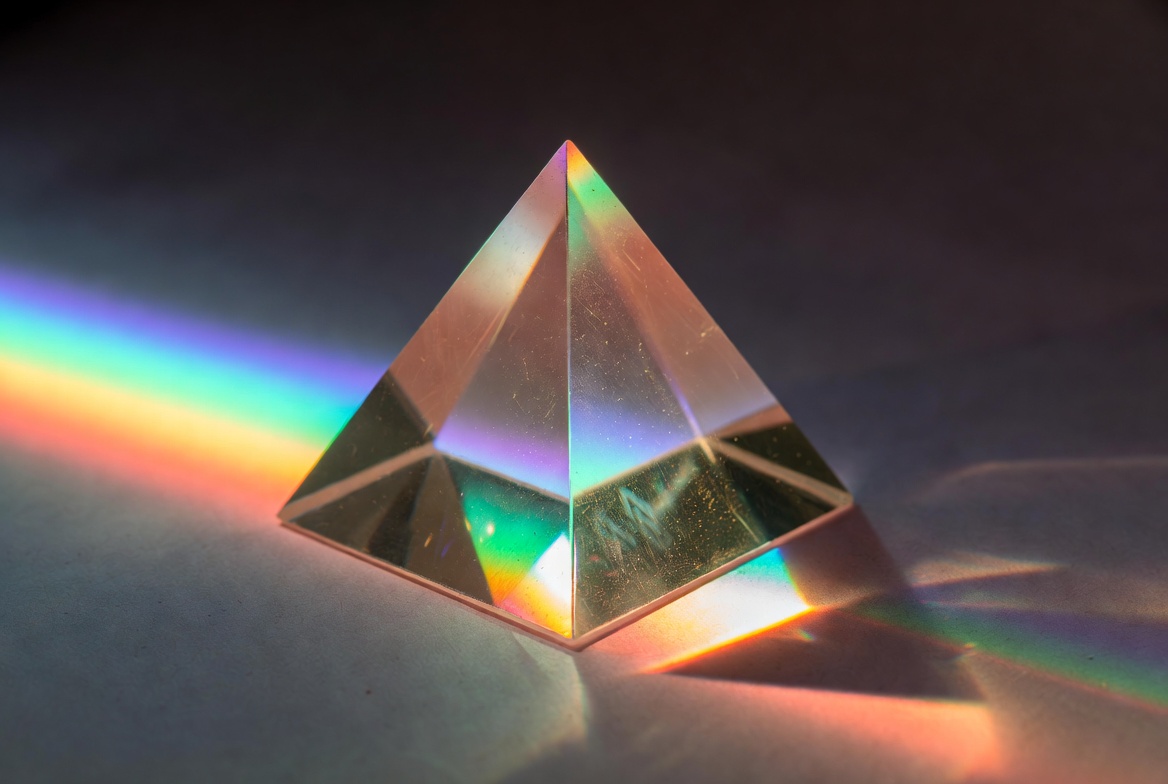
What you need: A glass prism (available at science shops and Amazon for under $15), direct sunlight Rainbow quality: Sharp, bright, scientific-looking spectrum Difficulty: Very easy
A glass prism is the method scientists have used since Isaac Newton. If you’re lucky enough to have a crystal chandelier at home, or a hanging crystal decoration, you may not need to buy a prism. Basically, all you do is place a large piece of white paper on the floor beside your living room window that lets in lots of direct sunlight in the morning. Hold the prism in the direct sunlight beam and rotate it slowly until the rainbow projects onto the wall or floor.
A glass prism creates an extremely sharp, vivid rainbow — almost laser-precise lines of colour rather than the soft blended bands you see in other methods. It is beautiful in its own way, but it also produces a relatively small, stationary display that doesn’t fill a room.
Tips for best results:
- Hold the prism 30–60 cm from the surface you are projecting onto for the widest rainbow
- Try angling the prism up toward the ceiling for a rainbow arc on the ceiling above you
- A crystal pendant from a chandelier or a faceted crystal ornament works just as well as a purchased prism
Best for: Science enthusiasts, children’s rooms, quick experiments.
Method 4: A CD or DVD Disc (Free, Iridescent Effect)
What you need: An old CD or DVD, direct sunlight or a flashlight Rainbow quality: Iridescent shimmer rather than a full spectrum arc Difficulty: Zero
Hold a CD up to some sunlight or shine a flashlight on one in a darkened room and you will see a rainbow on the CD. The reason why a rainbow appears is because there are tiny ridges in the surface of the CD that are reflecting the light in different directions.
This method creates a rippling, iridescent rainbow shimmer rather than a traditional arc more of a metallic interference pattern than a full ROYGBIV spectrum. It is striking in its own way, and the moving, shifting colours as you rotate the disc are genuinely beautiful.
To get the rainbow onto your walls, angle the shiny side of the CD toward sunlight and catch the reflected light on a white surface nearby. The effect is more abstract think of it as rainbow-inspired art rather than a true rainbow projection.
Best for: Creative lighting effects, photography, children’s activities.
Method 5: A Handmade Stained Glass Suncatcher (Best by Far — Permanent, Effortless, Breathtaking)

What you need: A handmade stained glass suncatcher hung in a sunny window Rainbow quality: Full-room, vivid, spectacular the real deal Difficulty: Hang it once, enjoy it forever
This is the method that produces the rainbow displays you see all over Pinterest wide bands of vivid colour sweeping across walls, floors, and ceilings. And it requires absolutely nothing from you once it is hung.
A handmade stained glass suncatcher works differently from the other methods on this list. Instead of splitting white light into a spectrum through refraction alone, it transmits coloured light directly. Each panel of art glass cobalt blue, ruby red, emerald green, amber gold filters the white sunlight passing through it, projecting that specific colour into the room. When all the panels work together, the combined projection fills the room with layered colour bands that shift and move as the sun travels across the sky throughout the day.
The result is not a small arc of colour on a piece of paper. It is a room transformation.
At 8am on a clear morning in an east-facing window: soft amber and pink tones from the low sun angle. At 11am with the sun high and direct: the most vivid, saturated rainbow spread full red-orange-yellow-green-blue bands across the opposite wall. At 4pm in a west-facing window: warm golden-hour light through the glass creates rich amber and violet tones across the floor.
The display is never the same twice, because the sun is never in exactly the same position. That is what makes it feel magical rather than mechanical.
Why stained glass beats every other method:
| Method | Rainbow size | Effort required | Permanent? | Room impact |
|---|---|---|---|---|
| Glass of water | Very small | Repositioning needed | No | Minimal |
| Mirror in water | Medium | Setup each time | No | Low |
| Glass prism | Small–medium | Hold in place | No | Low–medium |
| CD disc | Iridescent only | Hold in place | No | Low |
| Stained glass suncatcher | Full room | Hang once | Yes — forever | Spectacular |
How to Get the Most Rainbow From Your Suncatcher
Once you have a suncatcher hung in the right window, these three adjustments maximise your rainbow display:
1. Position it close to the glass. The closer the suncatcher sits to the window surface, the more concentrated and vivid the colour projection. Hanging it 2–4 cm from the glass creates sharp, saturated colour bands. Further back gives a softer, more diffused effect.
2. Use a south or east-facing window. Place the rainbow maker near a sunny window with direct light coming in — early morning or early evening light works best. Direct sunlight through stained glass creates the most saturated colours. Indirect or cloudy-day light still produces colour, but softer and less vivid.
3. Give it a white wall to project onto. White, cream, and light grey walls reflect rainbow colours back into the room most beautifully. Dark walls absorb the light rather than reflecting it, reducing the visual impact significantly.
The Science Behind the Magic (In Plain English)
Every rainbow — whether from a raindrop, a glass prism, or a stained glass suncatcher — works because when light passes through water, light waves of all different wavelengths blend together to make white light, but they separate to make a rainbow — because each wavelength refracts at a slightly different angle.
Red light has the longest wavelength and bends the least. Violet light has the shortest wavelength and bends the most. All the colours in between arrange themselves in that familiar order: red, orange, yellow, green, blue, indigo, violet. This is why every rainbow, everywhere in the world, always appears in the same colour sequence.
The difference with stained glass is that the colour comes from filtered transmission rather than refraction — each piece of coloured glass absorbs all wavelengths except its own and lets only its specific colour through. The result is purer, more saturated colour projection than any refraction method can achieve.
Frequently Asked Questions of how to make rainbow light in your room
Can I make rainbow light without direct sunlight?
Methods 2 and 3 work with a strong LED flashlight in a darkened room. A stained glass suncatcher does produce some colour in diffused light, but it is significantly more vivid in direct sun.
Why is my rainbow small and faint?
Three common causes: not enough direct sunlight hitting the object, the room is too bright to see the projection clearly, or the projecting surface (wall, floor) is too dark. Try darkening the room and using a white surface to catch the rainbow.
Which method makes the biggest rainbow?
A handmade stained glass suncatcher produces the largest and most vivid rainbow display by a significant margin — full-room colour projection that none of the DIY methods can match.
How long does the rainbow last each day?
With a suncatcher in a south-facing window, direct sunlight produces rainbow light for 3–6 hours on a sunny day. The exact hours depend on the season and the angle of your window.
Summary of how to make rainbow light in your room
If you have tried the water glass and the mirror and want the real thing the kind of rainbow that fills an entire wall a handmade stained glass suncatcher is the answer.
At Suncova, every piece is hand-crafted from premium art glass in vivid jewel tones, and comes with a hanging loop ready for any window. One sunny morning and you will understand why this is the most-saved home decor item on Pinterest.