
How to Hang a Suncatcher in a Window Without Ruining Your Wall (5 Methods Ranked Best to Worst)

You just got a handmade stained glass suncatcher. You’re holding it up to your window. It looks incredible. Now what? Don’t grab a suction cup yet — read this first.
Why So Many Suncatchers End Up on the Floor
Here’s the truth nobody tells you when you buy a suncatcher: the hanging method matters as much as the suncatcher itself. Get it wrong and you’re sweeping up broken glass at 2am. Get it right and that piece of handcrafted art catches the morning light beautifully every single day — for years.
After helping thousands of customers display their Suncova pieces, we’ve tested every hanging method imaginable. Some are brilliant. Some are quietly dangerous. This guide ranks all five methods honestly — from the safest and most beautiful, to the ones you should think twice about.
Plus: the single most important thing most people overlook when placing a suncatcher in a window (it has nothing to do with hooks).
Before You Hang Anything: The Window Direction Rule
This is the step most guides skip — and it’s the one that determines whether your suncatcher creates a jaw-dropping rainbow display or just hangs there looking nice.
Choose a window that faces east if you want your suncatcher to reflect the greatest amount of light in the morning, or a window that faces west if you prefer maximum reflected light in the evening. South-facing windows get direct sun for the longest stretch of the day, making them ideal for all-day rainbow displays.
Once you’ve picked your window, position the suncatcher so it hangs in the direct path of sunlight — not behind a sheer curtain, not in the shadow of the frame. Centre it in the glass for maximum light exposure. Now you’re ready to hang.
Method 1: Tension Curtain Rod — The Best Overall (Especially for Renters)
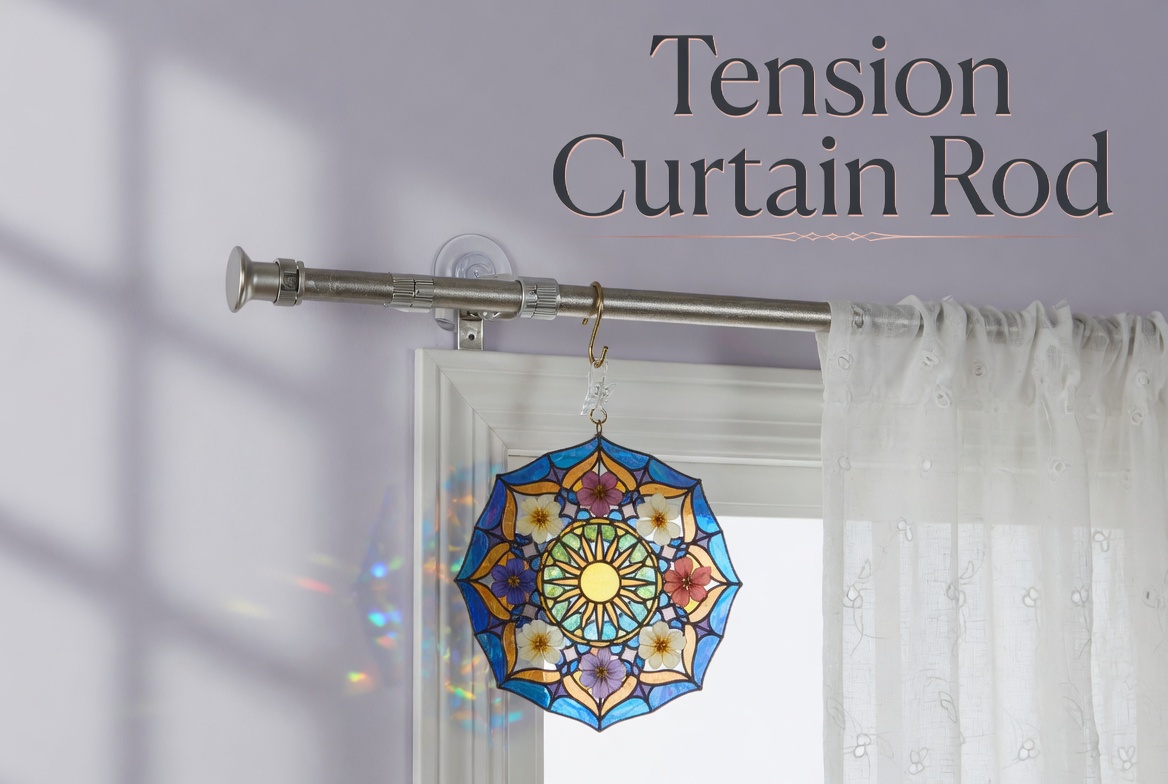
Best for: Renters, kitchen windows, anyone who hates drilling | Damage-free: Yes | Weight limit: Heavy stained glass
This is the method we recommend to almost everyone, and it’s embarrassingly simple. A small tension rod — the kind sold for café curtains — presses into the inside of your window frame with zero drilling, zero hooks, and zero commitment.
How to do it:
- Measure the inside width of your window frame
- Buy a tension rod that fits that measurement (under $10 at any home store)
- Press it snugly into the frame at your preferred height
- Hang your suncatcher from the rod using a small S-hook or a loop of clear fishing line
Why it wins: The rod distributes the suncatcher’s weight evenly across the whole frame — which means even a heavy handmade stained glass piece hangs safely and securely. You can slide the suncatcher left or right to find the exact spot where sunlight hits it best. And when you move house, the rod comes with you, leaving zero marks.
Method 2: Screw-In Hook Above the Window Frame — The Most Secure (For Homeowners)
Best for: Heavy stained glass, permanent installations | Damage-free: No | Weight limit: Any
If you own your home and want the most secure display possible, a small screw-in hook drilled into the wooden window frame or the wall directly above the window is the gold standard.
Wrap a piece of strong wire — tiger tail wire is ideal — around the hook and tie it securely to the jump ring or ribbon on your suncatcher. Keep the suncatcher slightly away from the glass so it doesn’t knock against the window when the breeze blows.
The key detail most people miss: Drill into solid wood — the window frame itself, or a wooden beam above. Never into drywall or plasterboard alone. A suncatcher that falls because the anchor couldn’t hold the weight is not a fun experience.
Tiger tail wire is the hanging material of choice for good reason. It is strong enough for any suncatcher size, nearly invisible once installed, and doesn’t degrade in sunlight the way ribbon or thread can over time.
Method 3: Curtain Rod With Rings — Best for Displaying Multiple Suncatchers
Best for: Collections, living rooms, maximalist displays | Damage-free: If the rod is already installed | Weight limit: Light to medium
If you want to display three, five, or seven suncatchers in a single window and create a full wall-of-rainbows effect, this is your method. An existing curtain rod fitted with decorative clip rings lets you hang multiple suncatchers at slightly different heights — and when sunlight hits them all at once, the rainbow display across the room is genuinely breathtaking.
Space suncatchers 3–4 inches apart so their light projections layer rather than compete. Mix different shapes (round, butterfly, mandala) and sizes for an editorial, gallery-style look. This setup also lets you swap pieces with the seasons without any additional installation.
Method 4: Suction Cup Hooks — Use Them Right or Don’t Use Them At All
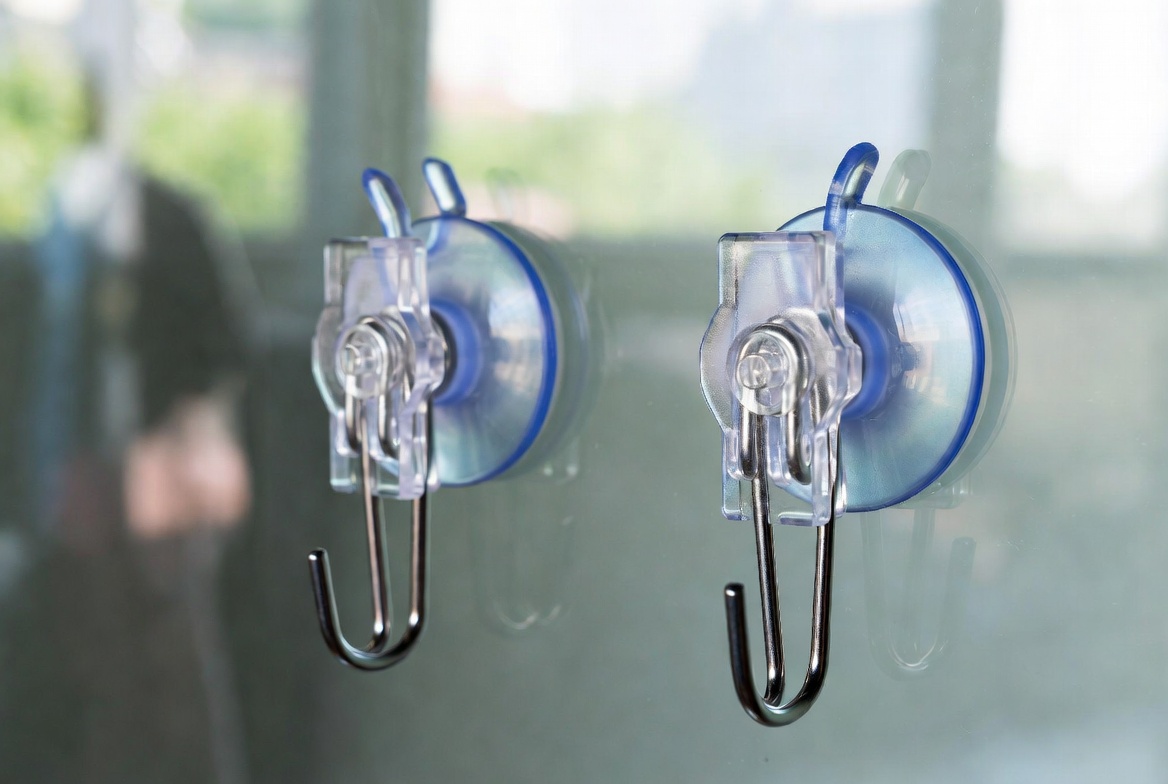
Best for: Lightweight acrylic or resin suncatchers | Damage-free: Yes (when they hold) | Weight limit: Light only
Suction cups are the most common method and the most misused one. They work — but only under specific conditions, and they will eventually fail without warning.
Start with cleaning your window; a clean surface will help the suction cup adhere to the glass. Next, wet the suction cup before placing it on the window, ensuring it will not slip off the clean window.
Beyond that, there are a few extra steps that dramatically improve reliability:
- Apply a tiny amount of washing-up liquid to the back of the suction cup before pressing it on — this creates a much stronger initial seal
- Press firmly from the centre outward to push all air from under the cup
- Wait 24 hours before hanging anything from it
- Place a folded towel on the windowsill below for the first week, just in case
The honest warning: Glass gets warm and cools down quickly, especially in a sunny window, and that constant expansion and contraction slowly breaks the seal. Suction cups in south-facing windows often fail within months. Check and replace them regularly — they are not a set-and-forget solution for real stained glass. Save them for lightweight acrylic pieces only.
Method 5: Adhesive Command Hooks — The True No-Damage Option for Light Pieces
how to hang a suncatcher in a window
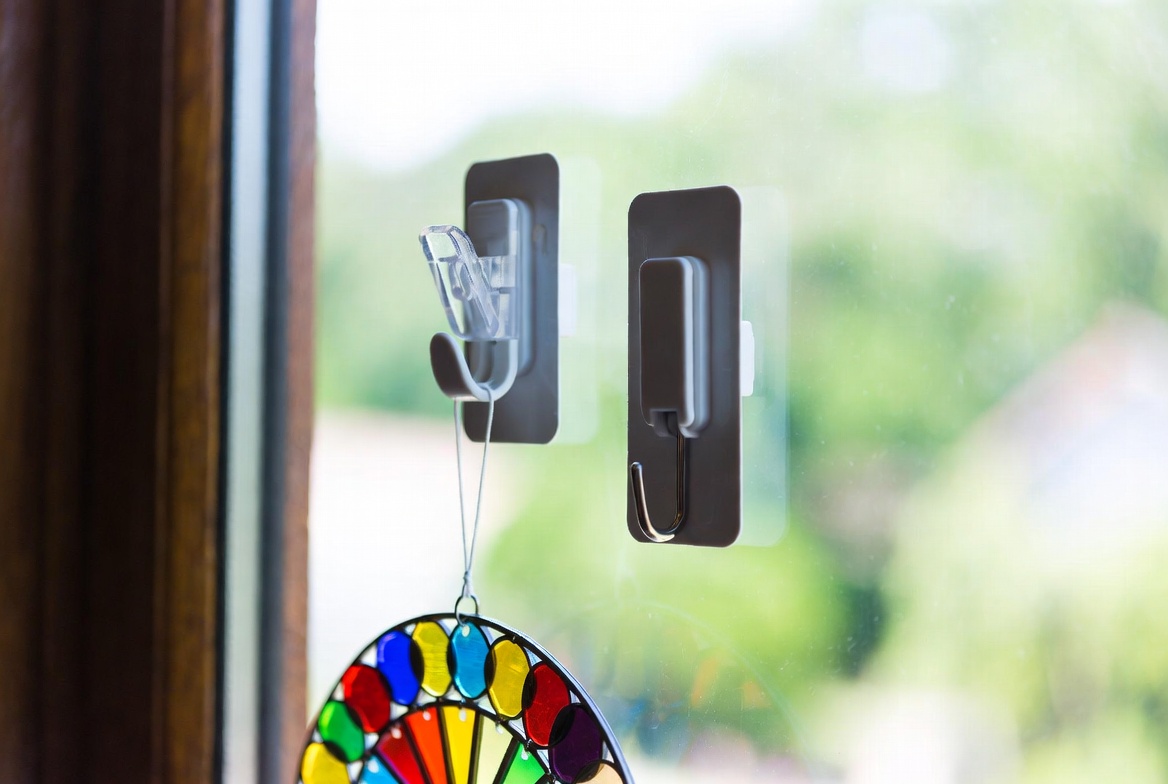
Best for: Lightweight suncatchers, dorm rooms, rental apartments | Damage-free: Yes | Weight limit: Under 1 lb
For very lightweight suncatchers — acrylic, resin, or small painted glass — 3M Command hooks offer a genuinely no-damage display solution on window frames, walls, and even some smooth surfaces.
The critical steps: clean the surface with rubbing alcohol and let it dry completely before applying. Press the adhesive strip firmly for 30 full seconds. Wait one hour before hanging anything. And follow the removal instructions exactly — pulling the tab slowly and straight down — to avoid any surface marks.
For heavier handmade stained glass suncatchers, Command hooks are not recommended. The adhesive is not rated for glass weight combined with the vibration and temperature changes of a sunny window.
The Hanging Height That Most People Get Wrong
Once you’ve chosen your method, the final question is: how high up in the window should the suncatcher sit?
One of the most common solutions is to hang suncatchers directly above the windowsill. In this position, they interact optimally with the light throughout the day, filling your room with bright colours and interesting shades.
As a general rule, position the centre of your suncatcher at roughly eye level when seated, and keep it within 2–4 inches of the glass surface for the strongest light projection. The closer to the glass, the more concentrated and vivid the rainbow display. The further back it sits, the more diffused and soft the light becomes — both can be beautiful, depending on the effect you want.
Quick Reference: Which Method Is Right for You
| Method | Damage-free? | Weight it holds | Difficulty | Best for |
|---|---|---|---|---|
| Tension curtain rod | ✅ Yes | Heavy | Easy | Renters, most windows |
| Screw-in hook | ❌ Small hole | Any weight | Medium | Homeowners, heavy glass |
| Curtain rod + rings | ✅ If existing | Light–medium | Easy | Collections, displays |
| Suction cup | ✅ (short-term) | Light only | Easy | Acrylic suncatchers |
| Command hook | ✅ Yes | Very light | Easy | Lightweight, temporary |
how to hang a suncatcher in a window Frequently Asked Questions
Can I hang a suncatcher with no holes and no suction cups at all?
Yes, the tension curtain rod method requires nothing except the rod itself. It presses into the frame mechanically and holds securely without any adhesive or drilling.
How do I stop my suncatcher from swinging and knocking the glass?
Keep the hanging length short — no more than 4–6 inches between the hook and the top of the suncatcher — and keep it slightly back from the glass surface so it can’t contact the window even when it moves.
Will a suncatcher scratch my window?
Only if it swings far enough to touch the glass repeatedly. The solutions: shorten the hanging length, or use a small piece of museum putty on the windowsill to lightly anchor the bottom of the suncatcher on still days.
How do I clean a hanging suncatcher?
Take it down, wipe gently with a soft damp cloth and mild soapy water, rinse with a damp cloth, and dry immediately with a lint-free cloth. Never use abrasive cleaners on stained glass. Clean glass produces noticeably brighter rainbow light than dusty glass — even a light dust will dim the display.
Summary
Now that your window is ready and your hanging method is chosen, all that’s left is the suncatcher itself.
At Suncova, every piece is handcrafted using premium art glass and comes with a hanging loop sized and reinforced for all five of the methods above. Our stained glass suncatchers are designed to hang beautifully, catch light brilliantly, and last for decades — not just months.